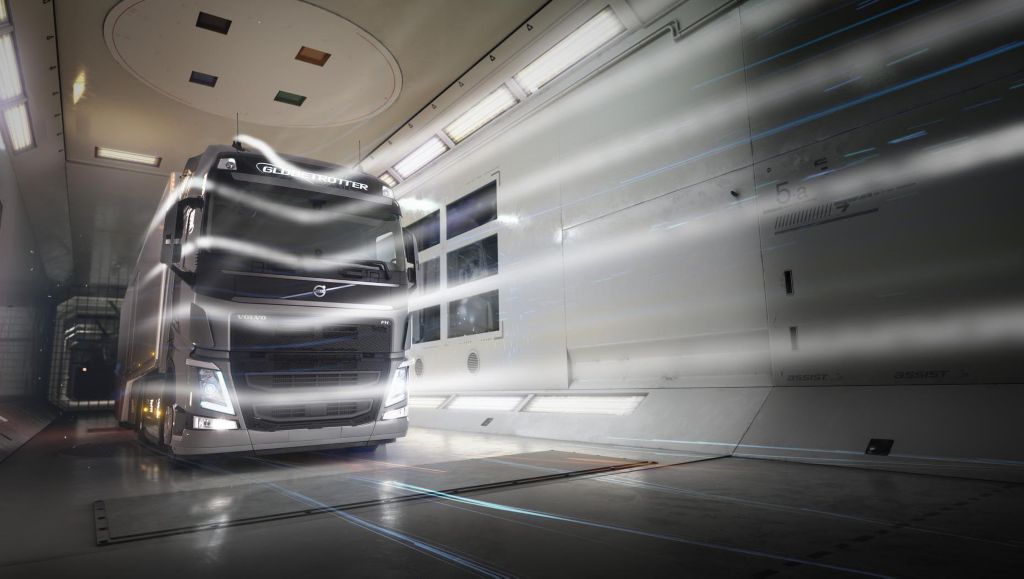
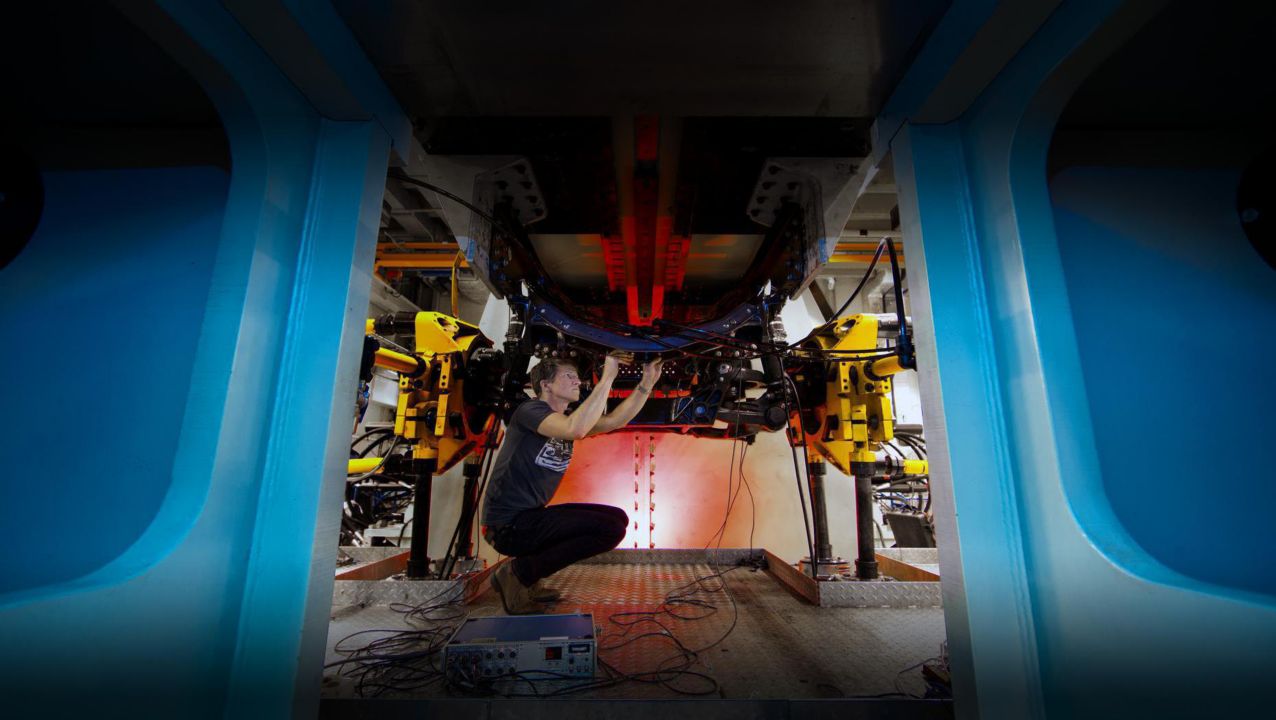
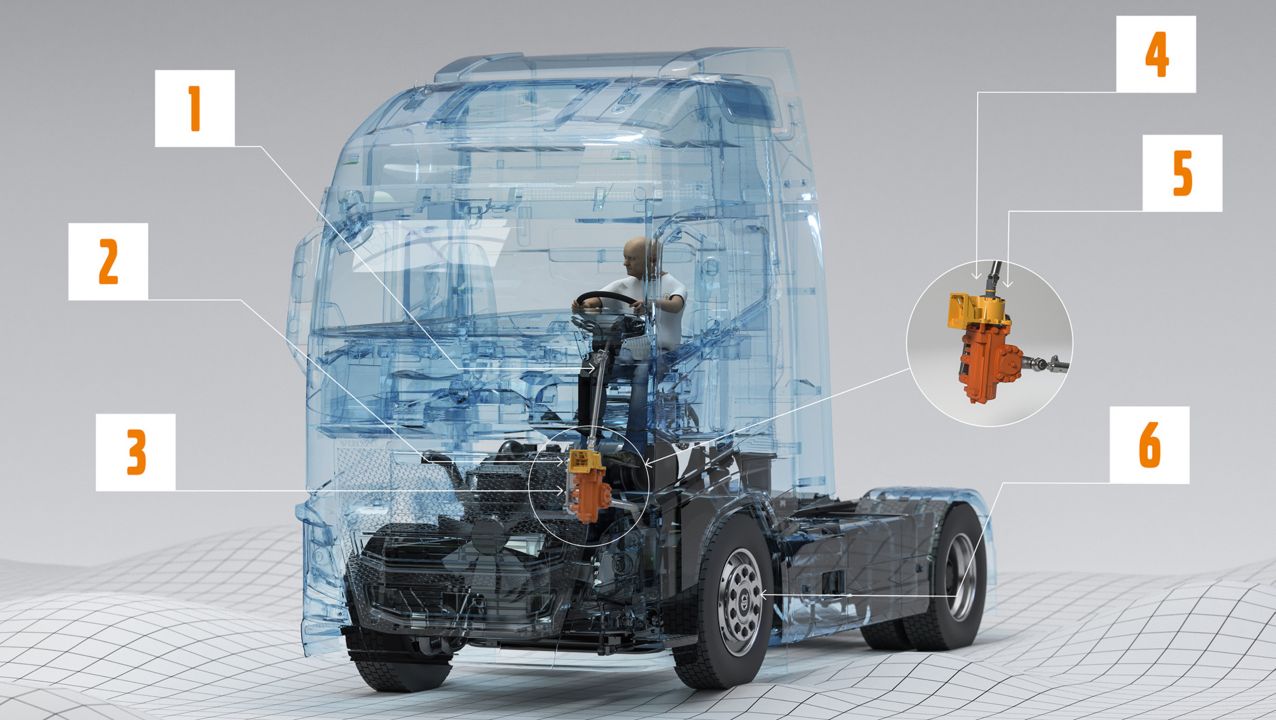
When a truck is driven at constant speeds of 60-90 km/h, air resistance is one of the factors that has the greatest impact on fuel consumption. For many years, Volvo Trucks has therefore devoted considerable attention to the development of aerodynamics. There are a number of projects centred around applications that can significantly reduce air resistance. These will be introduced to the market stepwise in the years to come.
We twisted and turned every area of the truck, scanning it to see where an improvement would yield the greatest results for our customers.
“Working with advanced technology development is all about trying to anticipate the future needs of our customers and ensuring that the technology they want is available when regulations and cost levels allow for their introduction,” says Anders Tenstam.
In recent years, technological development has given Volvo Trucks new opportunities to improve the aerodynamic performance of its products. Rising fuel costs over the long term and growing awareness of climate issues are pushing customers to demand more fuel-efficient vehicles. This development towards higher fuel efficiency is in line with Volvo Trucks’ philosophy that every drop of fuel counts
The drive for fuel-efficiency is also affecting engine development: “We continuously strive to meet tighter regulatory requirements for cleaner engines without affecting driveability. Performance, productivity and driveability are extremely important for our customers and their drivers. We’ve always focused on responding to these requirements, but it must not be at the expense of fuel consumption. On the contrary,” says Mats Franzen, Product Manager for Volvo Trucks’ engines.
For Volvo Trucks, the advent of EURO 6 step C has resulted in a number of different optimisations for D11, D13 and D16 engines, such as pistons with less friction against the cylinder liner, a new and improved turbocharger and an optimised camshaft. Together with a number of improvements in the software, this enables lower fuel consumption without engine performance being affected.
It is a product that will provide significant customer benefits in terms of lower fuel costs and therefore higher profit margins, while maintaining performance.
“With our EURO 6 step C engine, we take another big step closer to the future of energy efficient transportation. It is a product that will provide significant customer benefits in terms of lower fuel costs resulting in higher profit margins, while maintaining performance,” says Mats Franzen.
“We are interested in all new technological developments. Based on the amount of fuel we consume every month, an additional fuel saving of up to three per cent corresponds to thousands of litres for us,” says Jacek Słowiński.
Jastim is a long-haul Volvo Trucks customer with a strong focus on saving fuel. Volvo Trucks has therefore adopted the haulage firm’s specifications as the basis for the development of the new aerodynamic package. This is to create a tip alignment for customers driving at a relatively constant speed range of between 60-90 kilometres per hour and therefore benefit most from an aerodynamic improvement. Exactly how large a saving customers can achieve depends on their individual requirements and specifications, which in turn are controlled by the road conditions on the routes where their vehicles travel.
Based on the amount of fuel we consume every month, an additional fuel saving of up to three per cent corresponds to thousands of litres for us.
Anders Tenstam from Volvo Trucks is pleased that a new and flexible aerodynamic package for long-haul customers can now be introduced to the market. He sees great potential for further improvements, but acknowledges that technological maturity must be supported by new laws and regulations.
“Today, many countries’ regulations on vehicle length create a barrier to how much we can achieve in terms of aerodynamic performance. If tractor length was no longer included in the rig, for example, a more favourably shaped design could be introduced to the cabs. Today, the cab shape is the result of a delicate balance of features, both interior and exterior. A more aerodynamic cab would also then create more potential downstream on the vehicle, because of less pronounced large scale turbulence which steals energy in the front,” he says.