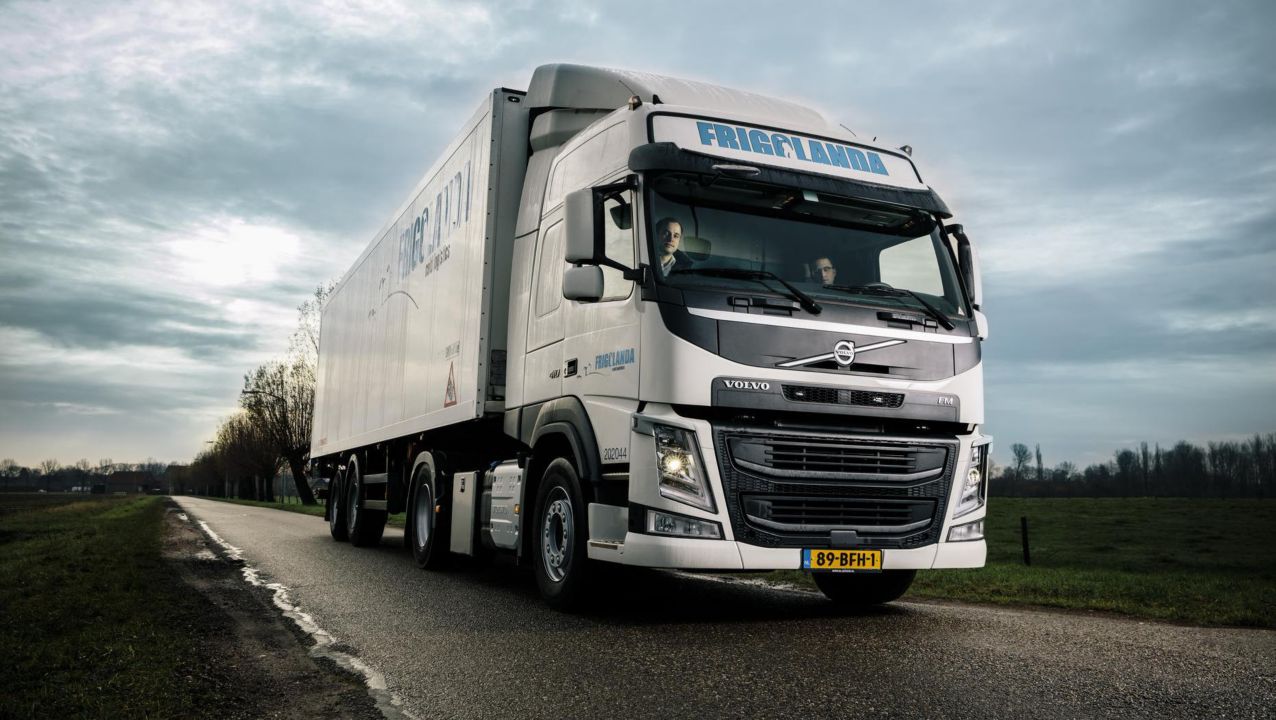
As this ecosystem of smart appliances is created, trucks are becoming intelligent too. When it comes to how connectivity will reshape the transport industry, much is yet to be discovered. However, some developments are more predictable than others.
Hayder Wokil, Director of Quality and Uptime at Volvo Trucks, is convinced that advances in the field of connectivity are going to revolutionise truck services: “When the different components of a truck can communicate their status to us, we will be able to prevent unplanned standstills in a totally new way,” he says.
Uptime – the availability of a truck for work – is becoming increasingly important to the transport industry, as higher requirements are making unplanned standstills more and more costly. Currently the direct cost of an unplanned standstill is estimated to be around €1,000 for an average European transport company, according to research from Volvo Trucks. And this is only the direct costs, such as recovery, repairs and lost transport revenue. The indirect costs, such as destroyed cargo or revenue loss due to a harmed reputation, are even harder to calculate.
“The ability to maximise uptime plays a decisive part in every truck business' survival. The truck has to function in order to make money for its operator.”
This is the rationale behind Volvo Trucks’ vision that no Volvo truck should encounter an unplanned standstill. A recent study conducted by Advanced Technology and Research at Volvo Trucks revealed that eight in every ten unplanned standstills could have been avoided if servicing was more dynamic and based on the current status of each truck - something that connectivity makes possible. Knowledge of the condition of a truck in real time will enable maintenance to be performed at once and in the right time, thereby reducing the risk of very expensive consequential damage, since a failed component can easily have a negative impact on others.
“Within the next five years, I expect transport companies to put more pressure on truck manufacturers to ensure that their vehicles provide higher uptime. For this reason Volvo Trucks is currently running a number of research projects to secure higher uptime for its customers. One unplanned standstill is one too many. The impact it has can be devastating on the transport company’s economy,” adds Hayder Wokil.
Volvo Trucks is already using telematics to monitor wear and tear to parts such as air driers, batteries, brakes and clutches.* However, even if it was technically possible to equip every component in a truck with its own sensor, this would make the truck indefensibly expensive. So it is necessary to find ways of analysing data so that the whole truck is covered.